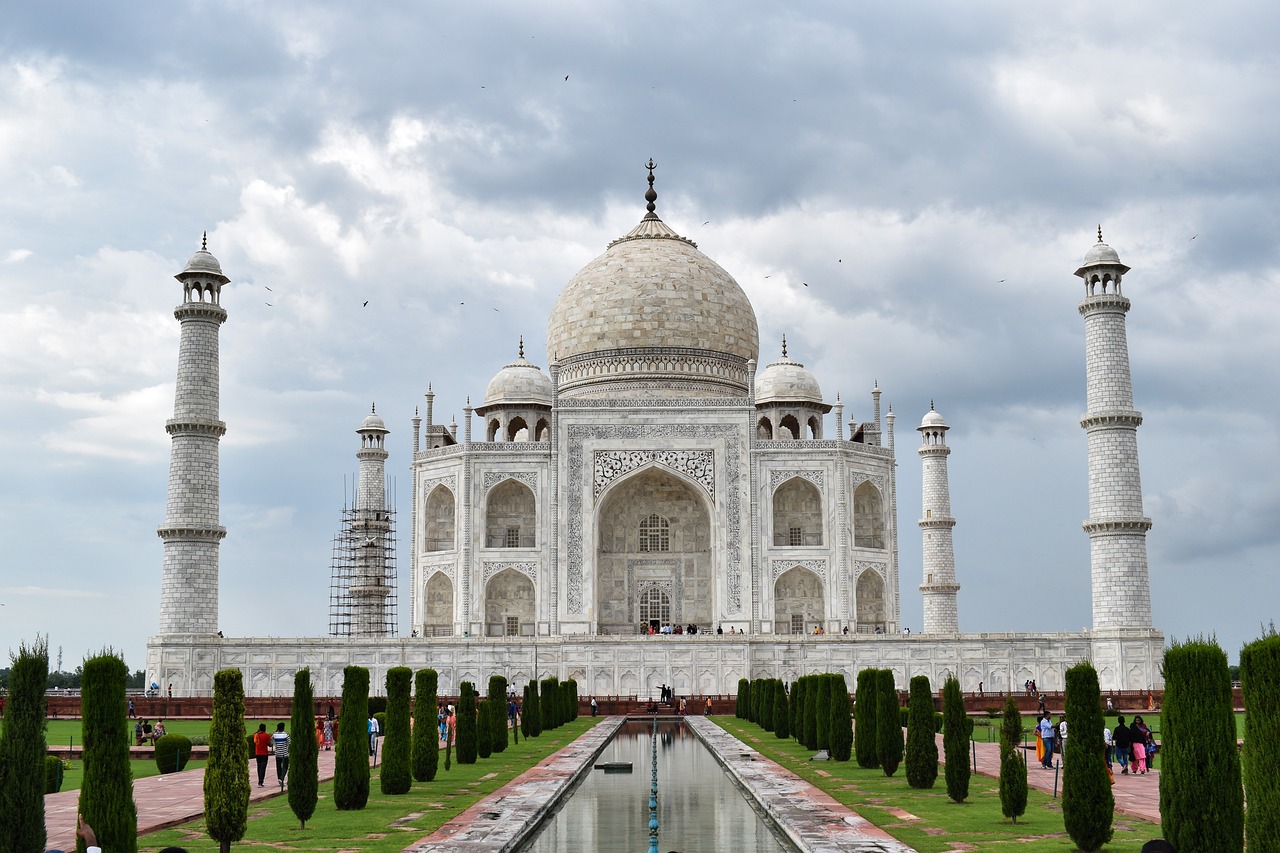
Unveiling the Majesty of the Taj Mahal: A Testament to Eternal Love
In the heart of India, on the banks of the shimmering Yamuna River, rises a monument that transcends architectural mastery. It is a poem in marble, a canvas bathed in moonlight, a whisper of a love story etched for eternity - the Taj Mahal.
Commissioned by Mughal emperor Shah Jahan in 1631, the Taj Mahal wasn't just a mausoleum; it was an elegy to his beloved wife, Mumtaz Mahal. Legend has it that upon her death, grief-stricken Shah Jahan vowed to create a monument so dazzling, so exquisite, that it would echo her beauty throughout the ages. And echo it did.
Rising from a 17-hectare verdant carpet, the Taj Mahal shimmers in shades of ivory white marble, its elegance punctuated by intricate pietra dura inlay of semi-precious stones. Four minarets, like watchful sentinels, stand tall at each corner, their tapered forms mirroring the central dome that crowns the mausoleum. Reflecting pools, like liquid emeralds, capture the Taj's ethereal beauty, blurring the lines between reality and a celestial dream.
Stepping through the imposing gateway, a sense of awe washes over you. The intricate geometric patterns inlaid in the red sandstone walls foreshadow the architectural symphony that awaits. As you approach the main mausoleum, the white marble seems to pulsate with an inner light, its surface adorned with verses from the Quran, etched in delicate calligraphy.
Inside, the air is hushed, reverent. The cenotaphs of Mumtaz Mahal and Shah Jahan lie at the heart of the chamber, surrounded by a latticework screen of intricately carved marble. Light filters through the dome, bathing the space in a soft, ethereal glow, highlighting the delicate floral motifs and geometric designs that adorn every surface.
But the Taj Mahal is more than just a monument to love. It is a testament to the Mughal Empire's artistic zenith, a fusion of Persian, Indian, and Islamic influences. The delicate pietra dura inlay, featuring flowers, vines, and even precious stones like lapis lazuli and jade, tells stories of faraway lands and forgotten gardens. The calligraphy, flowing like poetry across the walls, whispers verses of love and loss.
Beyond the mausoleum, the sprawling Char Bagh gardens unfold, their symmetry reflecting the order of the universe. Fountains gurgle, casting rainbows in the sunlight, while pathways lined with cypress trees lead to pavilions and resting platforms, each offering a new perspective of the Taj's mesmerizing beauty.
As the sun dips below the horizon, the Taj transforms once more. Bathed in the silvery glow of the moon, it takes on an ethereal quality, as if floating on a bed of mist. The white marble seems to radiate a soft luminescence, while the reflecting pools mirror the constellations like scattered diamonds.
About Taj Mahal
Welcome to the epitome of architectural perfection and a symbol of eternal love—the Taj Mahal. Situated on the banks of the Yamuna River in Agra, India, the Taj Mahal is a UNESCO World Heritage Site and one of the New Seven Wonders of the World. This marble marvel, built by the Mughal Emperor Shah Jahan in memory of his beloved wife Mumtaz Mahal, stands as a testament to the enduring power of love and the brilliance of Mughal architecture.
| Taj Mahal | Details |
|---|---|
| Location | Agra, Uttar Pradesh, India. |
| Description | The Taj Mahal is an iconic white marble mausoleum, built by Emperor Shah Jahan in memory of his wife Mumtaz Mahal. Construction Period: 1632–1653 |
| Significance | A UNESCO World Heritage Site, considered one of the New Seven Wonders of the World. Symbolizes eternal love and Mughal architectural grandeur. |
| Main Attractions | White marble domed mausoleum, intricate carvings, reflecting pools, and lush gardens. Material Used: White marble, semi-precious stones, and precious metals |
| Best Time to Visit | October to March for pleasant weather. |
| Activities | Admire the architecture, capture photographs, and explore the surrounding gardens. |
| Nearby Attractions | Agra Fort, Fatehpur Sikri, and Mehtab Bagh. |
| How to Reach | Well-connected by road, rail, and air. Nearest airport: Agra Airport. |
| Tips | Purchase tickets in advance, visit during sunrise or sunset for the best views and respect the rules and regulations of the monument. |
Key Features (Taj Mahal)
- Central Structure: The main mausoleum, crowned by a large white dome, houses the cenotaphs of Shah Jahan and Mumtaz Mahal.
- Minarets: Four minarets stand at each corner of the main platform, adding symmetry and visual appeal to the structure.
- Intricate Inlay Work: The exterior of the Taj Mahal is adorned with intricate floral and geometric patterns created through inlay work using precious and semi-precious stones.
- Charbagh Garden: The surrounding gardens are arranged in the traditional Persian char bagh (four-fold garden) style, symbolizing paradise.
- Reflecting Pool: A long reflecting pool, known as the Yamuna River, extends from the mausoleum, creating a stunning reflection of the Taj Mahal.
Your Visit to the Taj Mahal
Here's a suggested itinerary for your visit to the Taj Mahal:
| Time | Activity | Details |
|---|---|---|
| 6:00 AM | Sunrise Visit | Experience the magical sunrise over the Taj Mahal for a breathtaking view. |
| 9:00 AM | Guided Tour | Take a guided tour to learn about the history, architecture, and significance. |
| 12:00 PM | Lunch Break | Enjoy a leisurely lunch at a nearby restaurant or hotel. |
| 2:00 PM | Agra Fort Visit | Explore the Agra Fort, another UNESCO World Heritage Site with a rich history. |
| 4:00 PM | Mehtab Bagh Sunset Visit | Head to Mehtab Bagh for a serene sunset view of the Taj Mahal. |
| 7:00 PM | Dinner in Agra | Savor dinner at a local restaurant, perhaps with a view of the Taj Mahal. |
| 9:00 PM | Optional Night Viewing (if available) | Experience the Taj Mahal in the moonlight during special night viewings. |
Tips for a Memorable Visit
- Ticket Reservations: Book tickets in advance, especially during peak seasons, to avoid long queues.
- Footwear: Wear comfortable footwear suitable for walking on marble surfaces.
- Photography: Capture the beauty of the Taj Mahal, but be aware of photography restrictions inside the main mausoleum.
Tourist Attractions to visit near the Taj Mahal
- Agra Fort (3 km away):
- Explore the Agra Fort, a UNESCO World Heritage Site known for its red sandstone architecture. Enjoy panoramic views of the Taj Mahal from various vantage points within the fort.
- Mehtab Bagh (2 km away):
- Visit Mehtab Bagh, a picturesque garden located across the Yamuna River from the Taj Mahal. It offers stunning views of the monument, especially during sunset.
- Itmad-ud-Daulah's Tomb (6 km away):
- Discover the "Baby Taj," the tomb of Itmad-ud-Daulah. Admire the intricate marble inlay work, which foreshadows the design elements of the Taj Mahal.
- Jama Masjid (4 km away):
- Visit the Jama Masjid in Agra, a grand mosque known for its Mughal architecture. It is one of the largest mosques in India.
- Fatehpur Sikri (38 km away):
- Explore the historic city of Fatehpur Sikri, a UNESCO World Heritage Site. Visit notable structures like Buland Darwaza, Panch Mahal, and the Jama Masjid.
- Chini Ka Rauza (4 km away):
- Admire the Chini Ka Rauza, a Persian-style tomb known for its colorful tilework. It is the final resting place of the Mughal courtier Allama Afzal Khan Mullah.
- Akbar's Tomb, Sikandra (12 km away):
- Visit the Tomb of Akbar the Great in Sikandra. The tomb complex reflects a unique blend of Hindu, Christian, Islamic, and Buddhist architectural styles.
- Mankameshwar Temple (3 km away):
- Experience the spiritual atmosphere at the Mankameshwar Temple, dedicated to Lord Shiva. It is one of the ancient temples in Agra.
- Kinari Bazaar (2 km away):
- Stroll through Kinari Bazaar, a bustling market near the Taj Mahal. Explore traditional crafts, jewelry, and local street food.
- Taj Museum (1 km away):
- Visit the Taj Museum to learn more about the history and architectural details of the Taj Mahal. The museum displays artifacts related to the construction of the monument.
[wp-faq-schema title="FAQ on Taj Mahal" accordion=1]
Plan Your Taj Mahal Experience
Ready to embark on a journey to witness the splendor of the Taj Mahal? Our India tour packages can help you plan a memorable visit to this architectural masterpiece. Contact us to arrange your itinerary and explore the grandeur of the Taj Mahal.
Let the Taj Mahal be your gateway to a world of timeless love and architectural brilliance. Book your cultural odyssey now! 🕌🌅📸 #TajMahal #SymbolOfLove #ArchitecturalMarvel
Contact Us 📧 | Call Us ☎️ | Visit Our Website 🌐